It’s become impossible for writers and other creatives to ignore the use of AI.
From social media captions to full-length novels generated in mere seconds, generative AI makes grand promises on speed, efficiency and scale. And it can be a tempting promise for authors juggling deadlines, marketing and PR demands, and the general pressure of gaining exposure.
But when it comes to writing books — and even creating content for your author brand — AI comes with serious costs. And it erases the very reason readers seek out human-authored work in the first place.
Here’s why authors should think carefully before letting AI do the writing for them.
AI and the author’s voice
Matthew Kressel adeptly noted in 2024 that using AI to write or even edit can greatly affect the end product. An author’s voice is not just style. It’s their writing fingerprint.
AI-generated writing tends to favor safe, generic phrasing and mimics the style of other writers as opposed to defining a unique style. (Most generative AI tools are also trained on vast datasets of existing writing. Much of that writing was created by authors who were never asked, credited or compensated.)
“When we write, we are making thousands of such choices,” Kressel says. “It all comes from our unique experiences, our unique way of seeing the world, and our unique mode of expression. It’s these kind of subtle details that can take a story from mediocre to good, and from good to great.”
Over time, heavy AI use can flatten an author’s voice until it becomes indistinguishable from thousands of others using the same tools. And in an already crowded market, that similarity is a liability.
You can still love your em dashes (and we do!) while prioritizing and developing your own voice and style.
Writing takes practice
No writer is a great writer from the moment they start out. Writing well requires practice and repeated feedback and constructive criticism (and probably reading On Writing by Stephen King).
Authors who rely on AI to draft outlines, blog posts, social media captions, marketing copy, etc., are short-circuiting their own learning process.
Kressel said “it’s in the hours of labor, the sweating over punctuation, word choice, character, and plot, where we learn and grow. Sucking is part of the process.”
AI use also hampers an author’s own confidence in their work. Finding your weak points as a writer — as well as your strengths — helps your development. Any tool should support an author’s growth process, not replace it.
Readers seek authenticity
Readers know exactly what they want. And it isn’t AI-written books.
They can quickly suss out when AI is involved. When readers suspect or discover that a piece of writing was generated by AI, trust dissolves.
The whole point of writing is to create art that builds connection. Humans create art; AI does not. AI cannot share in the human experience, only echo back with what it’s been trained with.
This extends to authors who use generative AI for social media content, website graphics, book covers, etc. If an author is willing to cut corners in content creation, why should readers trust they haven’t done the same with the content of the book itself?
AI is also trained on the artwork of humans. And for the most part, those artists have not been compensated. Using generative AI for this kind of content prevents a creative from losing out on income. (And truthfully, AI images just don’t look great!)
AI’s impact on the environment
Bottom line: AI isn’t great for the environment. Researchers have said the industry is on an unsustainable path.
According to the Massachusetts Institute of Technology, the computational power required to train generative AI models … can demand a staggering amount of electricity, which leads to increased carbon dioxide emissions and pressures on the electric grid.”
Large amounts of water are also needed to cool the hardware for these systems, putting a strain on local and municipal water supplies. A 2025 study found that AI-related water use alone now exceeds the entirety of global bottled water demand.
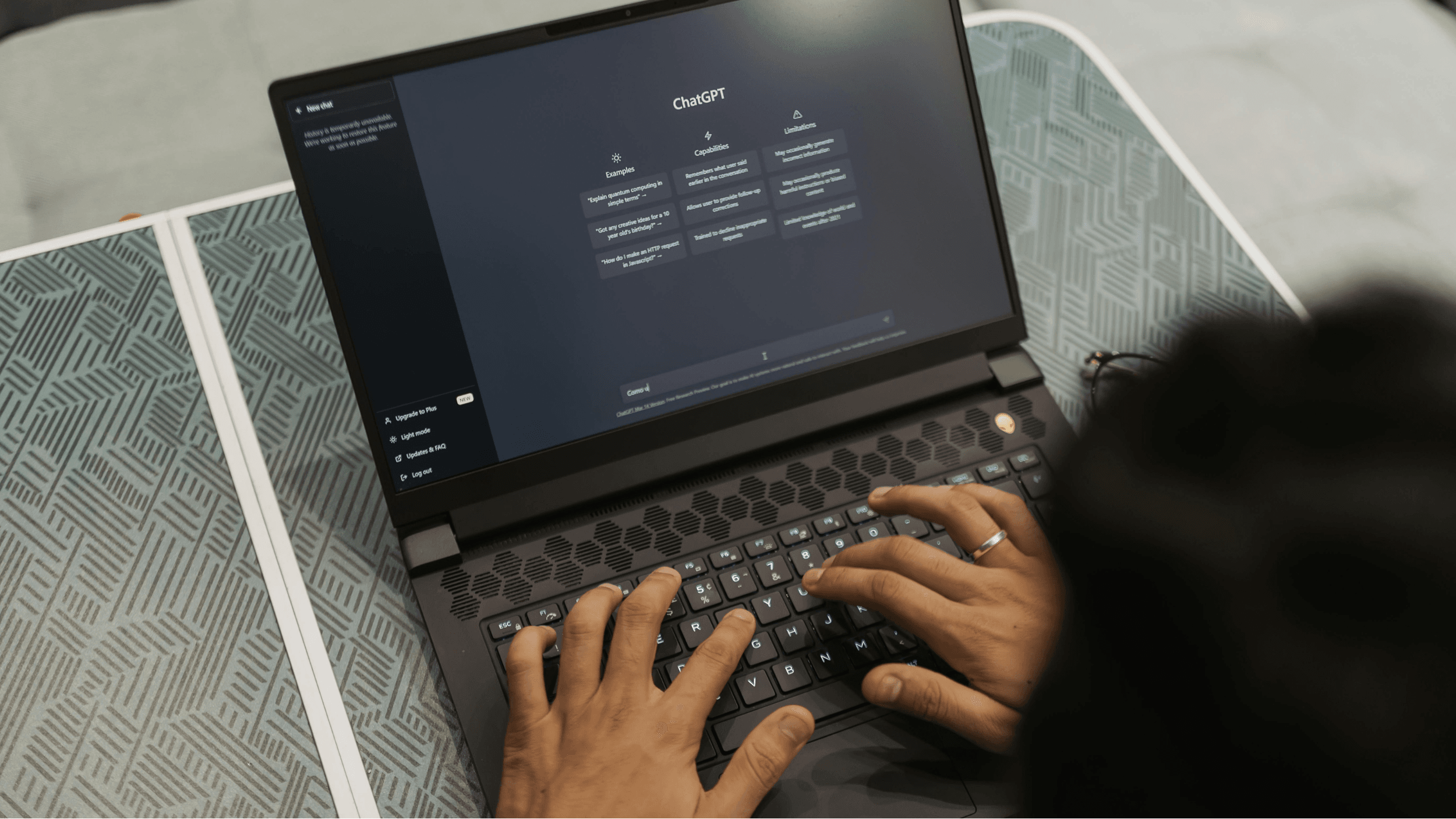
Every ChatGPT search affects resources across the Earth, which is already in a perilous position.
The industry is watching
Agents, editors, marketing firms (including Books Forward) and media outlets are becoming increasingly wary of AI-generated content. Many publications now require AI use disclosure. Others will reject AI-written submissions outright.
Authors themselves are also holding publishers accountable for their AI use. In an open letter to Lit Hub, more than 70 authors including Dennis Lehane and Gregory Maguire asked publishers to pledge “they will never release books that were created by machines.”
Ultimately, what seems like a helpful shortcut today could become a disastrous liability tomorrow for an author’s work and their reputation.
The bottom line
Readers don’t come to books looking for perfection. They open a book to seek connection.
They want to feel seen, challenged, comforted, excited, unsettled or understood by another human being. And no algorithm — no matter how sophisticated — can replicate that connection.
In a world increasingly filled with machine-generated words and pictures, human-written stories aren’t becoming obsolete. They’re becoming more valuable.
And that’s exactly why authors should keep writing these stories themselves.

Jennifer Vance is a publicist at Books Forward, an author publicity and book marketing firm committed to promoting voices from a diverse variety of communities. From book reviews and author events, to social media and digital marketing, we help authors find success and connect with readers.
Interested in what’s possible for your book sales and building readership? Check out our services, tell us your goals, and get a customized publicity campaign tailored just for you.